
El Niño Effect on Indian Agriculture in 2026: Crops, Monsoon & Farmer Guide
Learn how El Niño may affect Indian agriculture in 2026, including monsoon rainfall, crop yields, soil moisture and irrigation. Explore practical climate-smart farming tips for Indian farmers.
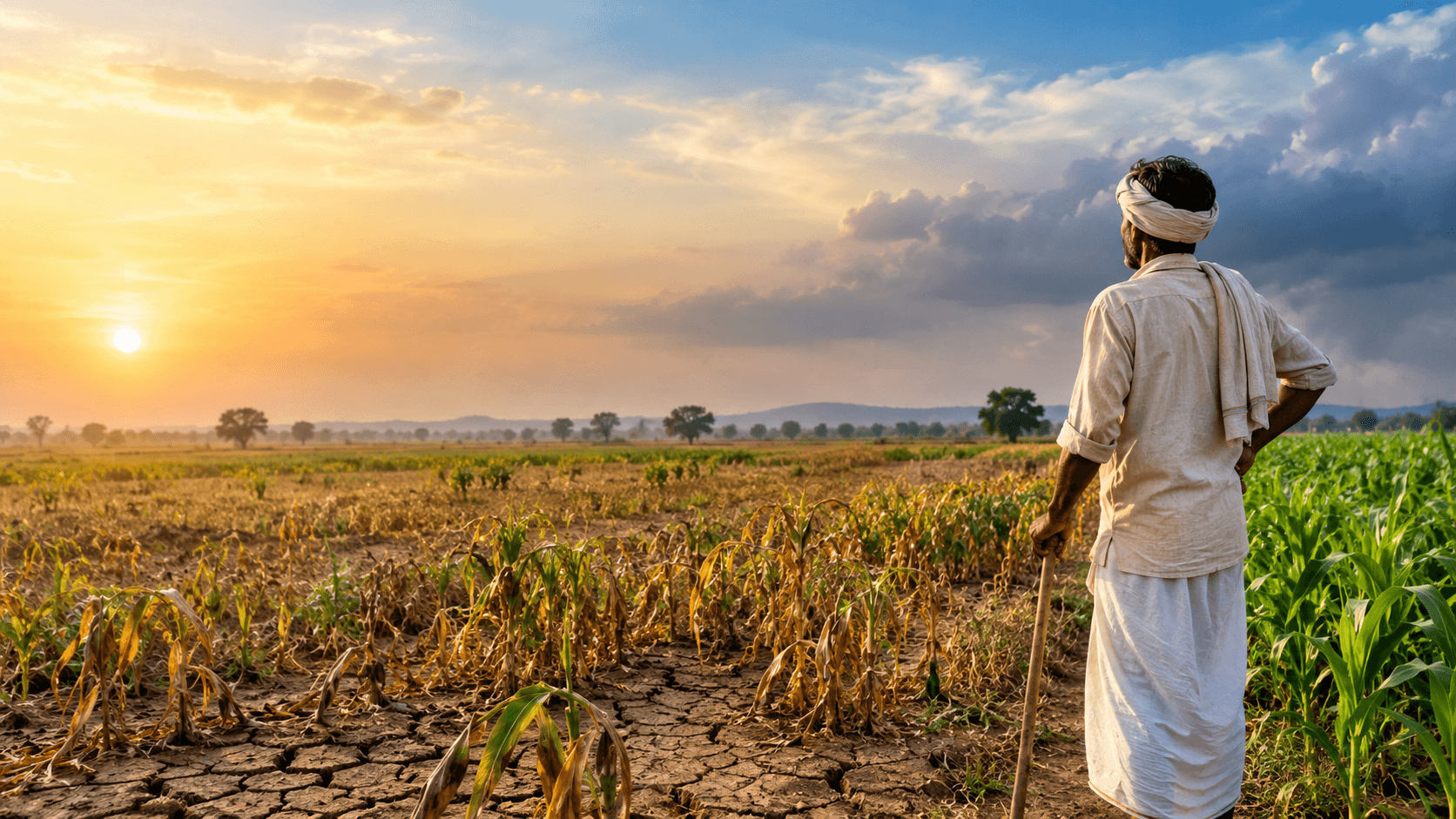
El Niño Effect on Indian Agriculture in 2026: Impacts, Risks and Solutions for Farmers
Introduction
Indian agriculture depends heavily on the monsoon. Rainfall influences crop sowing, irrigation requirements, soil moisture, farm productivity and farmers' incomes. When monsoon conditions become unpredictable, farmers may face challenges in deciding which crops to grow, when to sow seeds and how to manage limited water resources.
The El Niño effect on Indian agriculture in 2026 is an important topic for farmers, agricultural businesses and policymakers. El Niño is a climate phenomenon associated with warmer-than-average sea surface temperatures in the central and eastern equatorial Pacific Ocean. It can influence atmospheric circulation and weaken India's southwest monsoon, although the impact varies from year to year.
India's Ministry of Earth Sciences forecast below-normal southwest monsoon rainfall for 2026. NOAA's October 2026 climate outlook also indicates that El Niño is strengthening. These developments highlight the importance of water conservation, local weather monitoring and climate-resilient farming practices.
What Is El Niño?
El Niño is the warm phase of the El Niño–Southern Oscillation (ENSO), a natural climate pattern involving changes in Pacific Ocean temperatures and atmospheric circulation.
During El Niño conditions, changes in large-scale atmospheric circulation can influence rainfall patterns across different parts of the world, including the Indian monsoon.
For Indian farmers, possible consequences include:
- Irregular or below-normal rainfall in some regions.
- Longer dry spells between rainfall events.
- Higher temperatures and increased evaporation.
- Reduced soil moisture and groundwater recharge.
- Greater irrigation demand during critical crop growth stages.
Important: El Niño does not guarantee drought across India. Regional weather patterns, the Indian Ocean Dipole, local rainfall systems, irrigation facilities and other climate factors also influence agricultural outcomes.
How Is El Niño Affecting Indian Agriculture in 2026?
The effects of El Niño can differ by region and crop. Farmers should use district-level weather forecasts and agricultural advisories rather than assuming that every region will experience the same conditions.
1. Reduced or Uncertain Monsoon Rainfall
Rainfall is essential for rainfed farming systems across India. When rainfall is below normal or poorly distributed, farmers may experience delayed sowing, crop establishment problems and moisture stress.
States and regions with significant rainfed agriculture may need to pay particular attention to rainfall distribution, soil moisture and water availability.
What farmers can do:
- Follow local monsoon forecasts and agricultural advisories.
- Avoid sowing solely on the basis of the first rainfall event.
- Prepare contingency plans for delayed rainfall.
- Select crop varieties suited to local conditions and the available growing season.
2. Impact on Major Crops
Different crops respond differently to heat, water shortages and rainfall variability.
Rice: Insufficient water during transplanting, establishment and sensitive reproductive stages can affect crop growth and grain production. Water-saving irrigation methods may help where locally suitable.
Soybean: Delayed sowing and extended dry spells can affect germination, flowering and pod development. Farmers should follow region-specific sowing recommendations.
Cotton: High temperatures and inadequate soil moisture can affect plant growth and boll development. Efficient irrigation and moisture conservation are important where water is available.
Maize: Moisture stress during flowering and grain formation can reduce productivity. Timely irrigation, where feasible, can help protect sensitive growth stages.
Pulses and oilseeds: Crop performance depends on rainfall timing, soil type and the crop's growth stage. Suitable short-duration varieties may be useful in some situations.
The actual impact on yields in 2026 will depend on local weather, crop management and water availability. No single national estimate can accurately represent every farmer's losses.
3. Higher Irrigation and Production Costs
Hotter conditions and dry periods can increase crop water requirements. Farmers relying on borewells, pumps or purchased water may face higher operating costs.
To manage these risks, farmers can consider:
- Drip or sprinkler irrigation where appropriate.
- Irrigating during cooler parts of the day when suitable.
- Mulching to reduce evaporation.
- Repairing leaks in irrigation systems.
- Using soil-moisture information to guide irrigation decisions.
Farmers should also consider the cost of irrigation investments against the expected benefits for their crop and land.
4. Soil Moisture Loss and Land Degradation
High temperatures, limited rainfall and exposed soil can increase moisture loss. Repeated dry periods may make crop establishment more difficult.
Useful soil and water conservation practices include crop residue mulching, minimum or reduced tillage where appropriate, contour measures on suitable land and rainwater harvesting.
Farmers can also use farm ponds and recharge structures where technically suitable and permitted. These methods help capture available water but cannot fully compensate for prolonged rainfall deficits.
5. Effects on Livestock and Horticulture
El Niño-related heat and rainfall changes may also create challenges for dairy farming, poultry, orchards and vegetable production.
Livestock may need reliable drinking water, shade and adequate ventilation. Fruit trees and vegetables can be sensitive to heat and water stress, particularly during flowering, fruit development and establishment.
Farmers should monitor local advisories and seek crop- or livestock-specific recommendations from their Krishi Vigyan Kendra (KVK) or agriculture department.
Practical Strategies for Farmers to Reduce El Niño Risks
1. Choose Crops According to Local Conditions
Crop selection should consider soil type, available water, expected sowing window, market demand and local agricultural recommendations. Short-duration or drought-tolerant varieties may be suitable in some areas, but farmers should confirm their suitability with local experts.
2. Conserve Every Drop of Water
Water conservation is one of the most useful strategies during uncertain rainfall conditions.
- Use drip or sprinkler irrigation where suitable.
- Harvest rainwater whenever feasible.
- Maintain field bunds and appropriate drainage structures.
- Reduce unnecessary water loss.
- Schedule irrigation according to crop stage and soil moisture.
3. Improve Soil Health
Healthy soil can support better water infiltration and moisture retention. Practices such as adding suitable organic matter, maintaining soil cover and following balanced nutrient recommendations can support long-term soil health.
Avoid applying additional fertilizer without considering soil tests, crop needs and local recommendations.
4. Follow Weather-Based Farming Decisions
Weather forecasts can help farmers plan sowing, irrigation, fertilizer application, spraying and harvesting.
Farmers should regularly check official forecasts from the India Meteorological Department (IMD), local agricultural advisories and their nearest KVK. Short-range forecasts are especially useful for decisions that depend on rainfall in the coming days.
5. Prepare a Contingency Plan
Farmers can discuss contingency crop plans with local agriculture officers before weather conditions become critical. A practical plan may include alternative sowing windows, suitable crop varieties, water allocation priorities and options for protecting standing crops.
6. Monitor Market Prices and Input Costs
Weather-related changes in crop production can affect local supply and market prices, but prices do not always rise when production falls. Farmers should compare local market prices, transport costs, input prices and buyer demand before making selling decisions.
Agricultural marketplaces such as MahaAgri.ai can help users explore agricultural products, suppliers and market-related information. Always verify current prices, product details and supplier terms before making a transaction.
What Should Farmers in Maharashtra Know?
Maharashtra has diverse agricultural conditions, from rainfed areas to regions with irrigation facilities. The effects of rainfall variability can therefore differ substantially between districts and even between nearby villages.
Soybean, cotton, pulses, sugarcane, horticulture and other crops have different water requirements and critical growth stages.
Farmers in Maharashtra should:
- Follow district-specific rainfall and weather advisories.
- Check soil moisture before deciding on irrigation.
- Use locally recommended crop varieties and sowing windows.
- Prioritise available water for sensitive crop growth stages.
- Contact their KVK or local agriculture department for contingency advice.
Farmers in districts such as Nashik, Pune, Solapur, Jalgaon and other agricultural areas should rely on their own district's forecasts rather than a single statewide assumption.
Frequently Asked Questions
Does El Niño always cause drought in India?
No. El Niño increases the risk of weaker monsoon rainfall in many circumstances, but it does not guarantee drought. Other ocean and atmospheric conditions can modify its effects.
Which crops are vulnerable to El Niño in India?
Rainfed crops such as soybean, cotton, maize, pulses and rice may face risks when rainfall is poorly distributed or soil moisture is insufficient. The degree of risk depends on the region, variety and crop growth stage.
How can farmers protect crops during El Niño?
Farmers can conserve soil moisture, use water efficiently, follow local weather forecasts, select suitable crop varieties and prepare contingency plans with agricultural experts.
Will El Niño increase food prices in 2026?
Not necessarily. Food prices depend on actual production, stocks, imports, demand, transport costs and government policies, in addition to weather conditions.
Where can farmers get reliable agricultural weather updates?
Farmers should consult the India Meteorological Department (IMD), official agricultural advisories, local KVKs and state agriculture departments for current, location-specific guidance.
Conclusion
The El Niño effect on Indian agriculture in 2026 highlights the importance of preparedness, water conservation and informed farm management. Uncertain rainfall and higher temperatures can create risks for crop production, particularly in rainfed regions, but the effects are not uniform across India.
Farmers can reduce avoidable losses by monitoring local forecasts, conserving soil moisture, choosing suitable crop varieties and seeking timely agricultural advice. Decisions based on local conditions are more reliable than assuming a nationwide drought.
Stay informed with MahaAgri.ai for agricultural information, farming resources, supplier discovery and updates that can help support smarter farming decisions.
Sources and Further Reading
- India Meteorological Department (IMD): https://mausam.imd.gov.in/
- NOAA Climate Prediction Center: https://www.cpc.ncep.noaa.gov/
- Ministry of Earth Sciences, Government of India: https://moes.gov.in/
- ICAR agricultural resources: https://icar.org.in/
Disclaimer: This article provides general agricultural information, not a district-specific weather forecast or a guarantee of crop outcomes. Consult official advisories and local agricultural experts before making important farming decisions.