
Complete Soybean Farming Guide 2026: Best Practices for Higher Yield and Better Profits
Learn everything about soybean farming in 2026, from land preparation and seed selection to irrigation, fertilizer management, pest control, harvesting, and post-harvest storage. This complete guide helps farmers maximize yield and profitability.
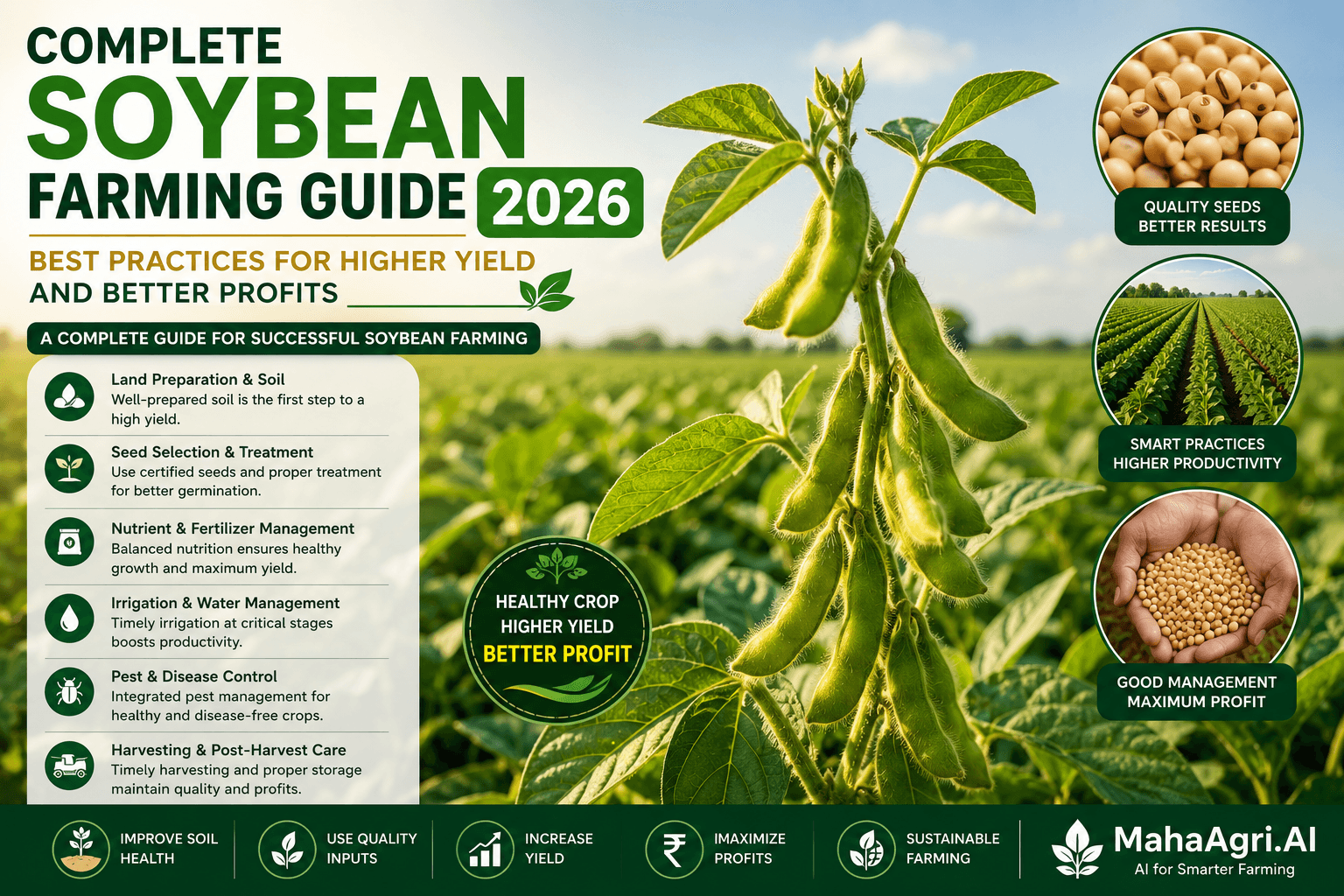
Complete Soybean Farming Guide 2026: Best Practices for Higher Yield and Better Profits
Introduction
Soybean is one of the most important oilseed crops grown in India and plays a significant role in agriculture, food production, and the livestock feed industry. States such as Maharashtra, Madhya Pradesh, Rajasthan, and Karnataka contribute substantially to the country's soybean production.
With the adoption of improved farming practices and modern technologies, farmers can increase soybean yield while reducing production costs. This guide covers every stage of soybean cultivation—from field preparation to harvesting—to help farmers achieve better results in the 2026 farming season.
Importance of Soybean
Soybean is often called the "Golden Bean" because of its high nutritional value and economic importance.
Major Uses
- Edible oil production
- Animal feed
- Soy milk
- Tofu
- Soya chunks
- Protein supplements
- Food processing industries
Soybean also improves soil fertility by fixing atmospheric nitrogen, making it beneficial for crop rotation.
Suitable Climate
Soybean grows best under warm and humid conditions.
Ideal Temperature
- Germination: 20–30°C
- Growth: 25–32°C
Rainfall
- 600–1000 mm of well-distributed rainfall is ideal.
Soil Requirements
Soybean performs well in:
- Well-drained loamy soil
- Clay loam soil
- Black cotton soil
- Soil rich in organic matter
Ideal Soil pH: 6.0–7.5
Avoid waterlogged fields, as excess moisture can damage roots and reduce yield.
Land Preparation
Good land preparation ensures proper germination and healthy crop growth.
Steps
- Deep plough the field once.
- Perform 2–3 harrowings.
- Remove weeds and crop residues.
- Level the land.
- Prepare proper drainage channels.
Adding well-decomposed farmyard manure before sowing improves soil fertility.
Best Time for Sowing
The ideal sowing period depends on the onset of the monsoon.
Recommended Sowing Season
- June to July (Kharif Season)
Timely sowing improves germination and maximizes yield potential.
Seed Selection
Always choose certified, disease-free, and high-yielding seeds.
Characteristics of Good Seed
- High germination percentage
- Disease resistance
- Uniform seed size
- Suitable for local climate
Using quality seeds is one of the most important factors affecting productivity.
Seed Treatment
Seed treatment protects crops during the early growth stages.
Recommended Treatments
- Fungicide treatment to prevent seed-borne diseases.
- Rhizobium inoculation for improved nitrogen fixation.
- Biofertilizer treatment for healthy root development.
Sowing Method
Row Spacing
- 45 cm between rows
Plant Spacing
- 5–10 cm between plants
Sowing Depth
- 3–5 cm
Proper spacing improves sunlight penetration and air circulation.
Nutrient Management
Balanced nutrition is essential for healthy plant growth.
Key Nutrients
- Nitrogen (N)
- Phosphorus (P)
- Potassium (K)
- Sulphur (S)
- Zinc (Zn)
Apply fertilizers based on soil testing recommendations whenever possible.
Irrigation Management
Soybean generally depends on rainfall.
However, irrigation becomes important during:
- Flowering stage
- Pod formation
- Seed filling stage
Avoid excessive irrigation, as waterlogging may reduce production.
Weed Management
Weeds compete with soybean plants for nutrients and water.
Best Practices
- Manual weeding
- Mechanical cultivation
- Mulching
- Recommended herbicides (as advised by agricultural experts)
Keeping the field weed-free during the first 40 days is especially important.
Major Soybean Diseases
Common diseases include:
- Soybean Rust
- Anthracnose
- Bacterial Blight
- Downy Mildew
- Charcoal Rot
Early disease identification and timely treatment help reduce crop losses.
Common Insect Pests
Farmers should monitor for:
- Stem Fly
- Girdle Beetle
- Tobacco Caterpillar
- Whitefly
- Aphids
Regular field inspection helps detect infestations before they become severe.
Integrated Pest Management (IPM)
Follow IPM practices to reduce pesticide use.
- Use healthy seeds.
- Monitor pest populations regularly.
- Encourage beneficial insects.
- Apply pesticides only when economically necessary.
- Rotate crops to break pest cycles.
Harvesting
Soybean is ready for harvest when:
- Leaves have dried and fallen.
- Pods become brown.
- Seeds are hard and dry.
Harvesting at the right time minimizes grain loss and improves quality.
Post-Harvest Management
After harvesting:
- Dry seeds properly.
- Clean and grade the produce.
- Store in moisture-free conditions.
- Protect against insects and rodents.
Proper storage preserves seed quality and market value.
Modern Technologies in Soybean Farming
Technology is making soybean farming more productive.
Farmers can now use:
- AI-based disease detection
- Weather forecasting tools
- Drone crop monitoring
- Smart irrigation systems
- Satellite crop monitoring
- Soil testing technologies
These innovations help reduce costs while improving productivity.
How MahaAgri.AI Supports Soybean Farmers
MahaAgri.AI provides a digital platform where farmers can:
- Explore agricultural products
- Learn modern farming techniques
- Stay updated with farming news
- Discover crop protection solutions
- Connect with trusted suppliers
- Access AI-powered farming insights
Our goal is to help farmers adopt smarter agricultural practices and improve profitability.
Conclusion
Soybean farming offers excellent opportunities for farmers when supported by proper planning, quality inputs, and modern agricultural practices. By following scientific cultivation methods and embracing technologies such as AI, farmers can increase yields, reduce risks, and achieve better profits.
MahaAgri.AI is dedicated to empowering farmers with reliable information, innovative solutions, and a digital ecosystem that supports sustainable agriculture across Maharashtra and India.